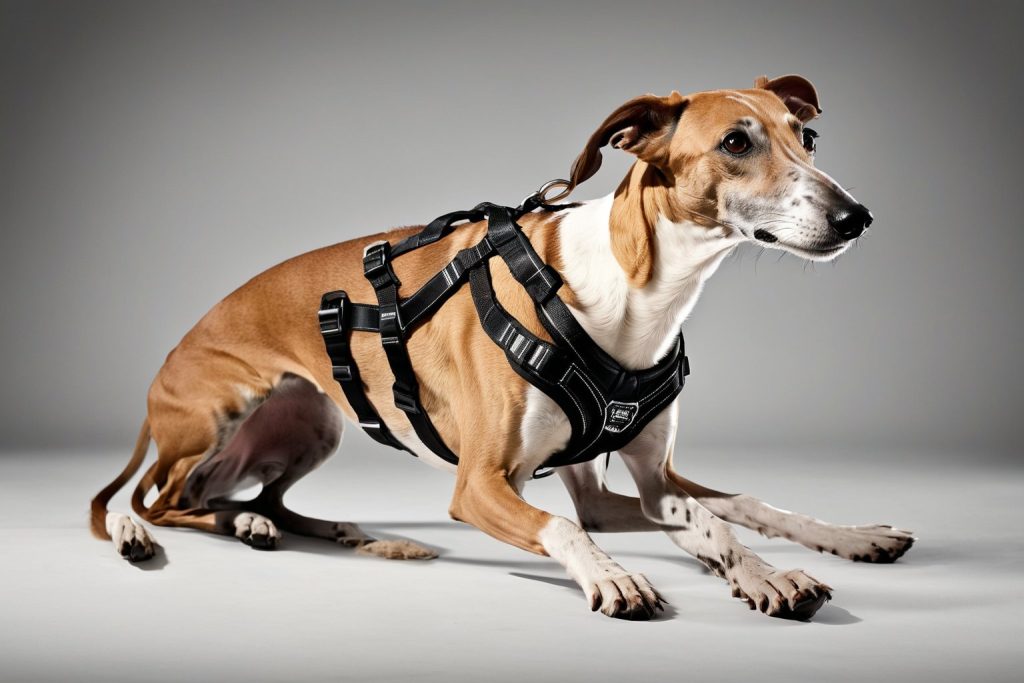
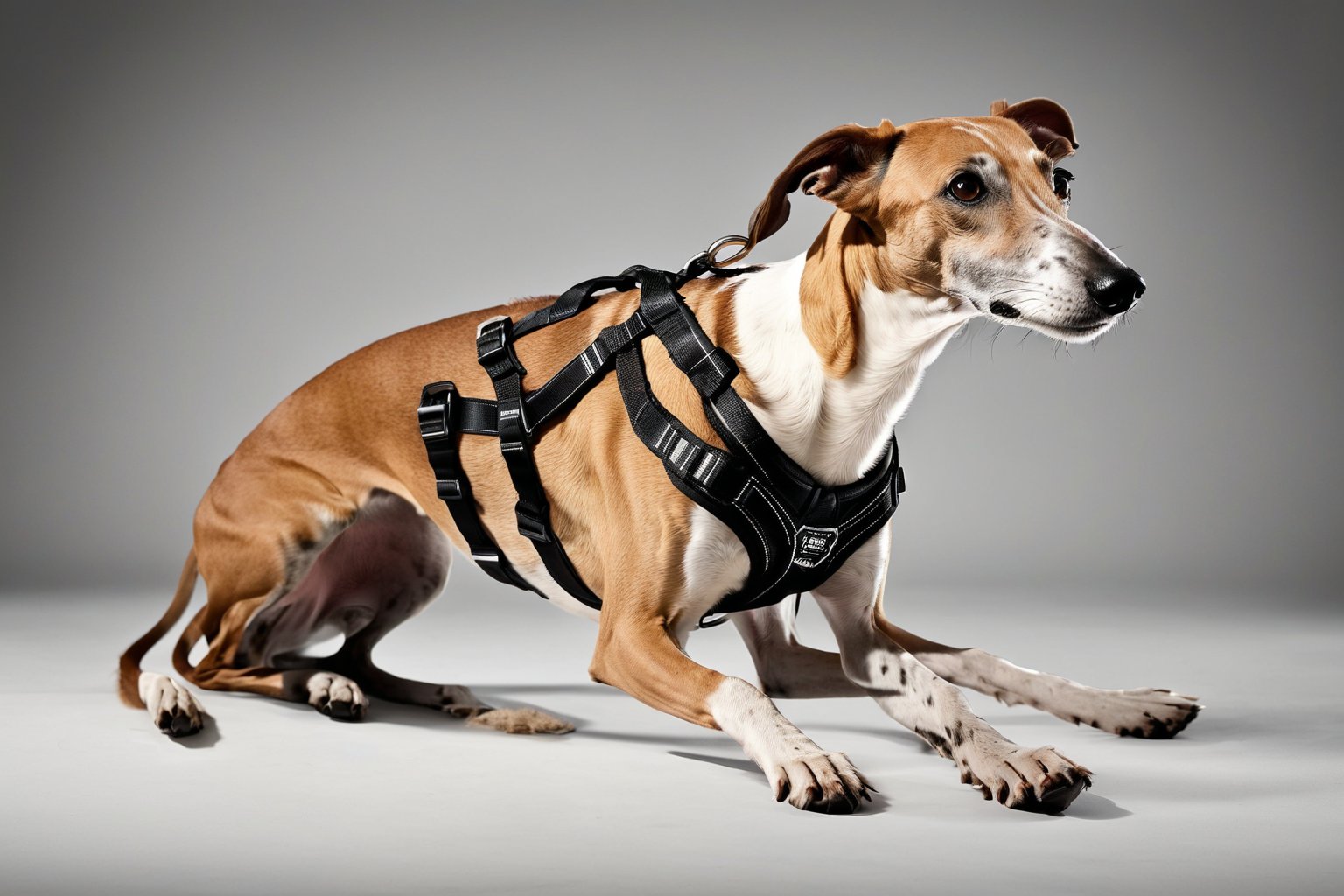
Racing greyhounds and other competitive canines demand equipment that supports explosive acceleration and precise handling. A standard walking harness rarely meets the biomechanical requirements of a sport built on split-second turns and sustained velocity. Choosing the correct racing harness involves understanding load distribution, material resilience, and the specific anatomy of the canine athlete. Unlike pet gear designed for leisurely strolls, racing harnesses must withstand high torque without restricting the natural extension of the shoulder blade. The wrong fit can lead to chafing, reduced speed, or even injury during the heat of competition. This guide breaks down the critical variables that separate a functional racing harness from a mere fashion accessory.
Anatomy and Fit Parameters
The first consideration when selecting racing harness gear is the precise fit across the dog’s chest and torso. Racing breeds such as greyhounds possess a deep chest and a narrow waist, creating a unique silhouette that off-the-shelf products often misalign. A harness that sits too high on the neck can impede airflow, while one that hangs too low may interfere with the front leg stride. Experts recommend measuring the girth at the widest point of the ribcage and comparing it against the manufacturer’s size chart before purchase. Adjustable straps are non-negotiable, as muscle definition can change throughout a training cycle, requiring micro-adjustments to maintain a snug yet comfortable interface between dog and gear.
Weight is another decisive factor that influences both the dog’s performance and the handler’s control. A heavy harness can act as an anchor during the initial launch from the traps, slowing the acceleration phase that defines a successful race. Lightweight composite materials, such as high-tenacity nylon or woven mesh, offer the strength needed to resist pulling forces without adding unnecessary mass. However, durability must not be sacrificed for weight savings; the harness gear must endure repeated friction against the lure and the occasional scrape against the track surface. Balancing these competing demands requires a discerning eye for construction quality.
Attachment Points and Control Dynamics
Where the leash or lure line connects to the harness gear fundamentally alters how the dog perceives direction and pressure. Most racing configurations feature a rear attachment point positioned between the shoulder blades, which provides balanced steering without putting undue strain on the trachea. Some advanced models incorporate a front chest ring, which can help redirect a dog that tends to surge ahead of the pack, though this is less common in pure straightaway racing scenarios. The placement of the D-ring should be tested during a mock run to ensure it does not swing freely and cause instability when the dog changes lead.
The material of the attachment strap also plays a role in the feel of the connection. Leather latigos offer a classic aesthetic and a gradual give that many handlers find intuitive, but they can absorb moisture and become heavier in humid conditions. Synthetic webbing, by contrast, maintains its shape and strength regardless of weather, making it a pragmatic choice for year-round training cycles. Additionally, the width of the strap should be proportional to the dog’s size; a too-narrow strap can dig into the skin under tension, while an overly wide strap may be cumbersome for a sleek-bodied racer. Each choice reflects a trade-off between tradition and performance optimization.
Padding and Pressure Distribution
Padding is often marketed as a comfort feature, but in racing contexts, it serves a more functional purpose: preventing pressure sores during the high-intensity intervals of a race. Greyhounds have thin skin and minimal subcutaneous fat over their ribcages, making them susceptible to abrasion if the harness gear shifts during a sharp turn. Look for padding that is anatomically contoured rather than simply thick; channels cut into the foam allow for airflow and prevent the material from bottoming out under load. Memory foam inserts can be effective, but they must be covered with a durable outer shell to resist tearing when the dog is maneuvering at full speed.

However, excessive padding can inadvertently restrict the range of motion if it compresses too much when the dog extends its limbs. The ideal racing harness gear strikes a balance where the padding remains present at rest but does not bulge or shift when the animal is in full gallop. Handlers should perform a dynamic fit test by asking the dog to stretch forward and backward; any bunching of the material indicates a poor design. The goal is a seamless interface where the dog feels the handler’s cues through the harness without the equipment becoming a barrier to natural movement.
Material Durability and Weather Resistance
Racing environments vary from indoor arenas with climate control to outdoor tracks exposed to rain, dust, and temperature fluctuations. The chosen harness gear must maintain its structural integrity across these conditions. Ripstop nylon is a popular choice because its woven pattern prevents small tears from propagating, a useful trait when the harness snags on track obstacles or rough transport crates. For dogs that compete in cooler climates, water-resistant coatings can prevent the material from becoming saturated and heavy, but these treatments must be breathable to avoid trapping heat against the dog’s body during exertion.
Stitching quality is the unsung hero of harness longevity. Double-stitched seams reinforced with bar-tacking at high-stress points such as the shoulder straps and belly band are essential to prevent catastrophic failure mid-race. A single pulled thread can compromise the entire load-bearing capacity of the gear if not addressed immediately. When evaluating racing harnesses, run a finger along each seam to feel for uniformity and tension; inconsistent stitching is a red flag that the product may not withstand the rigors of competitive sport. Investing in well-constructed gear pays dividends in both safety and performance consistency.
Visibility and Safety Markings
Safety on the track is not only about the dog’s physical well-being but also about visibility to other competitors and track officials. Racing harness gear often incorporates reflective strips or high-visibility color panels to ensure the animal is discernible in low-light conditions, such as early morning training sessions or dusk races. Fluorescent orange or yellow are common choices because they contrast sharply with the typical track surface and surrounding foliage. Some handlers prefer muted tones for aesthetic reasons, but the trade-off is reduced visibility, which can be a liability during crowded meet events.
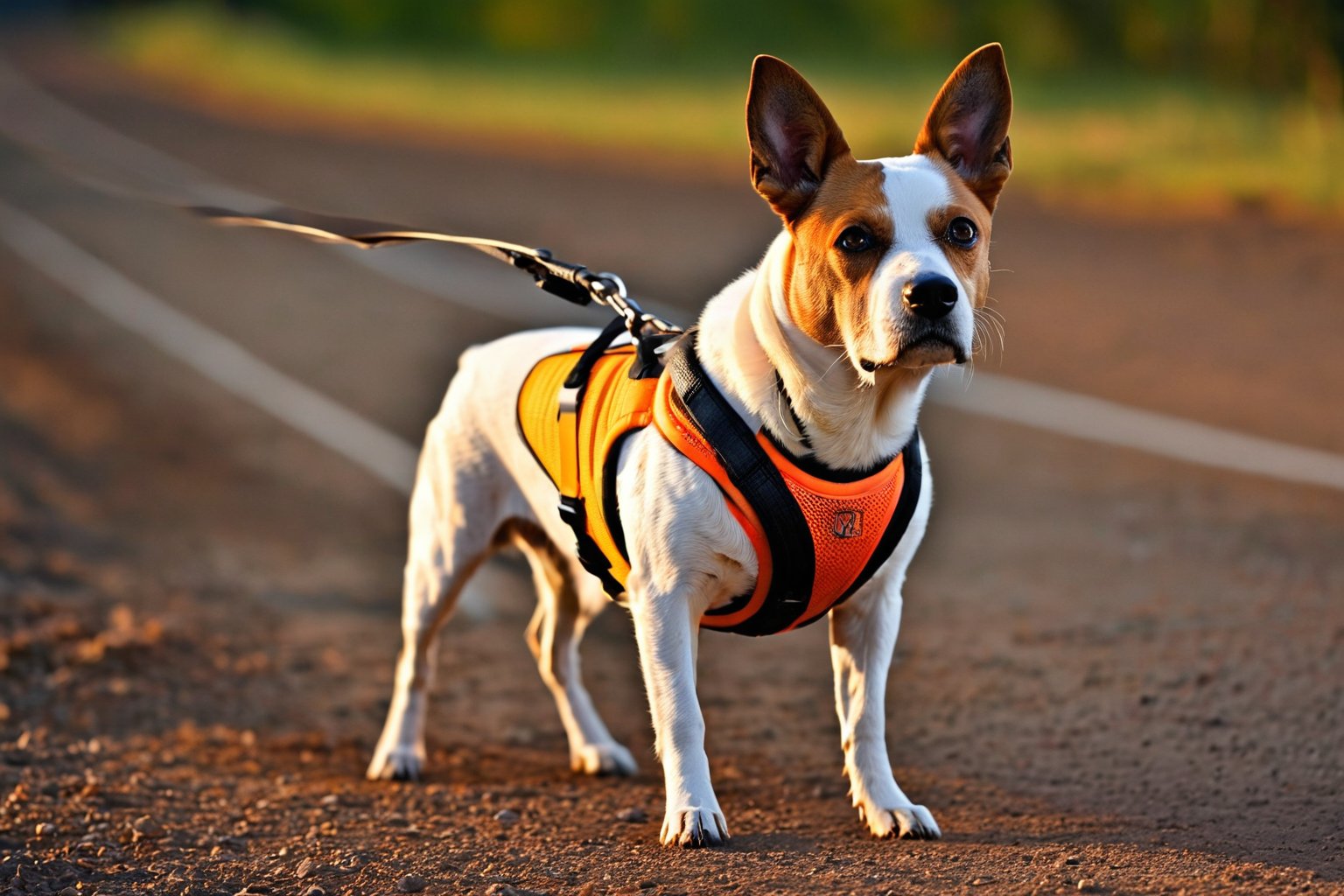
Beyond color, some modern harnesses feature integrated LED loops or pockets for glow sticks, though these additions add bulk and require battery maintenance. A simpler, time-tested approach is to select a harness in a bold, solid color and pair it with a separate reflective collar if additional visibility is needed. The key is to ensure that any safety markings do not interfere with the fit or function of the harness gear; a reflective strip that digs into the skin defeats its own purpose. Ultimately, the best choice combines high-visibility aesthetics with a fit that remains secure and comfortable throughout the duration of the event.
Cost vs. Performance Trade-offs
The price spectrum for racing harness gear ranges from budget-friendly synthetic options to handcrafted leather masterpieces costing several hundred dollars. While it is tempting to equate price with performance, the most expensive harness is not always the best fit for every individual dog. A mid-range nylon harness with adjustable straps and quality stitching often provides the optimal balance of cost and functionality for serious competitors. Handlers should assess their specific needs: a dog that is still growing or undergoing weight fluctuations may benefit from a more adjustable, lower-cost option, whereas a seasoned champion may warrant the precision fit of a custom-molded piece.
However, skimping on critical safety features such as reinforced stitching or secure buckle mechanisms can lead to costly veterinary bills or race disqualifications. It is wise to allocate a larger portion of the budget to the harness gear itself, as it is the primary interface between handler and hound during the most critical moments of competition. Reading reviews from other racing professionals and seeking recommendations from trusted trainers can provide real-world insights that spec sheets alone cannot convey. Making an informed purchase ensures that the investment in gear translates to measurable improvements on the track.

Growing up near the local track, I developed a lifelong fascination with the athleticism and strategy behind greyhound racing. I spend my free time analyzing past performances and studying breeding lines to better understand the nuances of every race. Sharing insights and celebrating the incredible speed of these dogs is what keeps me passionate about the sport.